

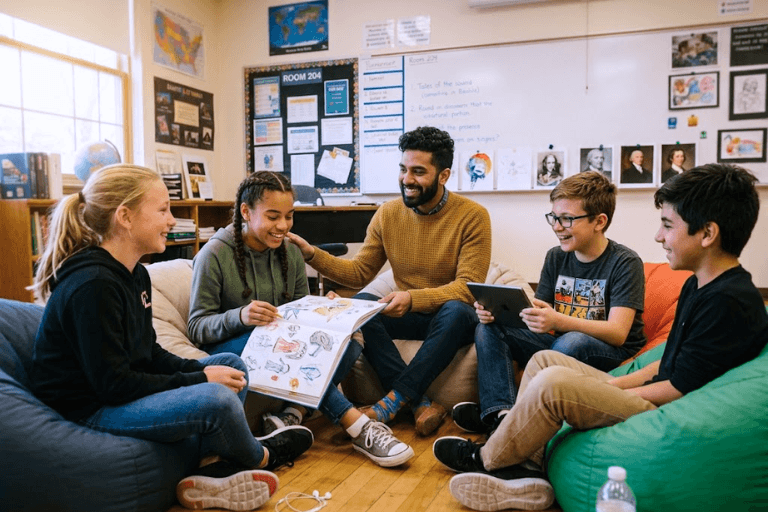
Strong teacher-student relationships are one of the foundations of effective classroom management. Building trust, connection, and belonging during the first weeks of school can make it easier to establish expectations, prevent behavior problems, increase student engagement, and create a positive classroom culture throughout the year.
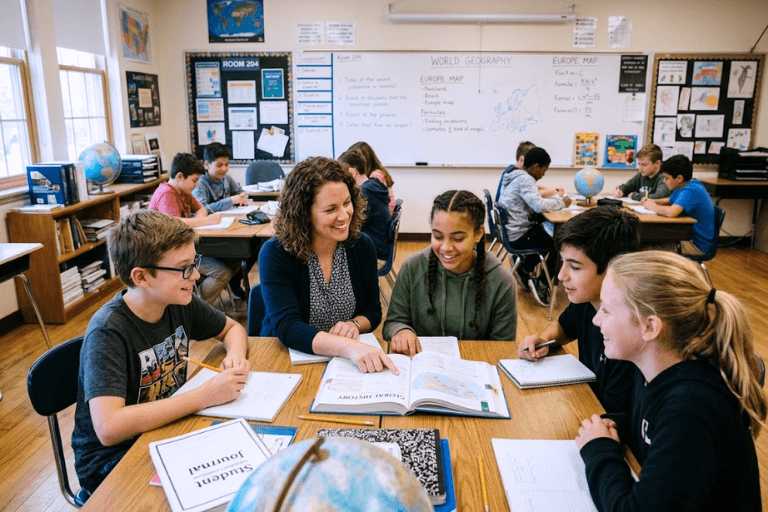
Many traditional approaches to classroom management focus heavily on rules, consequences, and enforcement. But when educators focus solely on compliance, they often find themselves locked in daily power struggles.
Students don’t misbehave simply to test boundaries; behavior is communication. When students feel unsafe, invisible, or disconnected, that internal dysregulation often manifests as disruption, withdrawal, or defiance.
When you build relational safety first:
Focusing on trust fills in the exact gaps in classroom management that they don’t teach you in college. Connection isn’t a distraction from your curriculum—it is the prerequisite for learning.
Before the first behavior problem happens, before the first student refuses to work, and before the first difficult conversation, teachers have an opportunity that can shape the rest of the year:
Build the relationship with your student first.
The first weeks of school aren’t only about organizing supplies, teaching procedures, and establishing classroom expectations. They’re also when students begin figuring out:
The answers to those questions can influence everything that comes next—from student engagement and classroom behavior to how students respond when correction is eventually needed.
Strong relationships don’t replace classroom management. They make classroom management stronger.
Learning students’ names quickly matters, but connection goes beyond knowing who’s sitting in each seat. Find out what students enjoy, ask about their interests, notice what they’re good at, and learn what motivates them.
You don’t need lengthy one-on-one conversations to make this happen. A quick “How did your soccer game go?” during arrival or “You told me you love drawing—this made me think of you” communicates something vital: I see you.
When a student eventually needs redirection, you are no longer correcting a stranger. You’re working from a relationship you’ve already started building.
Think about the student you suspect might need a little extra behavior support this year. Don’t wait for a disruption to give that student your attention. Look intentionally for opportunities to connect early:
If most of a student’s interactions with an adult involve “stop,” “don’t,” “sit down,” or “that’s your warning,” the relationship centers entirely around correction. Build up positive interactions first so redirection happens within an established bond.

Relationship-building doesn’t need to become another heavy task on your back-to-school checklist. Intentionally weaving trust into your schedule aligns with the core daily teacher practices that prevent student behavior problems before they start:
Some students make it obvious when they need connection. Others don’t. The quiet student who completes every assignment and follows every direction can easily move through the day without receiving much individual attention.
Make an intentional effort to notice those students, too:
A positive classroom culture isn’t built only by responding to students who need the most support. It’s created when every student feels seen and valued.
Building relationships does not mean lowering expectations. In fact, the strongest teacher-student relationships are built in classrooms with clear boundaries, predictable routines, and high expectations.
Students need warmth, but they also need structure. The goal is never Relationships OR Classroom Management. The goal is always:
Relationships+Routines+Clear Expectations+Consistency
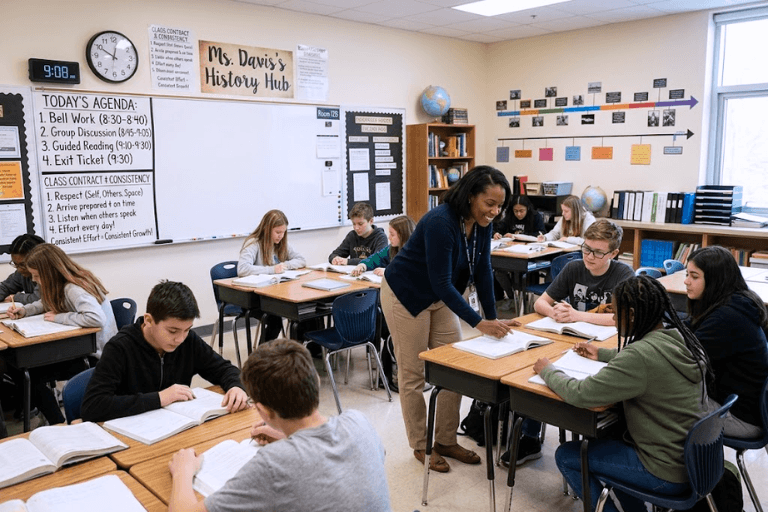
When students trust the adult setting the boundary, correction feels less like confrontation and more like guidance.
Even in classrooms with incredible relationships, challenging behavior will happen. Someone will make a poor choice, a conflict will arise, or a routine will fall apart.
The goal of relationship-building isn’t to create a classroom where students never struggle. It’s to create a foundation that makes it easier to work through those struggles together. Instead of allowing a difficult moment to define the relationship, teachers can communicate: “We can address what happened and still move forward.”
One of the biggest mistakes we can make is waiting until a student is struggling to try to build connection. By then, interactions may already revolve around behavior management.
The beginning of the school year gives teachers a clean slate. Use it. Create positive interactions before you need to correct. You don’t need a complicated program; you need small, genuine moments repeated consistently.
While relational classroom management is powerful, individual teachers cannot carry the full weight of behavior management alone. When severe behavioral challenges surface across multiple classrooms, even the most connected educators can experience burnout if the surrounding environment lacks clear, building-wide structure.
True, long-term relief happens when classroom-level relationships are paired with schoolwide consistency. When entire buildings adopt a shared framework—like The ROOTS Framework™—educators receive the collective structure and support needed to maintain calm, productive environments across every hallway, cafeteria, and classroom.
The first weeks of school set the foundation for everything that follows. Yes, teach the procedures, establish your routines, and practice transitions. But while you are building those systems, intentionally build the relationships underneath them.
Classroom management isn’t simply about getting students to follow directions. It’s about creating a space where students feel safe enough to learn, connected enough to participate, and supported enough to recover when they make mistakes.
Build the relationship before you need to manage the behavior. That may be the single most important choice you make all year.


