

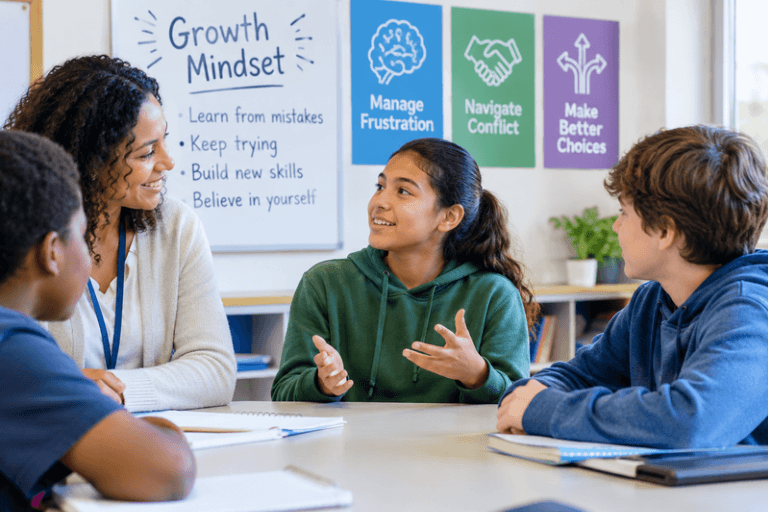
What if we approached student behavior with the same growth mindset we use to teach reading, math, and other academic skills?
At a Glance: Growth mindset isn’t just about academic achievement. Students can also learn to manage frustration, navigate conflict, and make better choices. By treating behavior as a set of skills that can develop with practice and support, teachers can encourage growth while maintaining clear expectations and accountability.
A student who struggles with reading might say, “I’m just not good at reading.”
We recognize that belief and help them understand that they can improve.
But what about the student who says, “I’m always the bad kid,” “I can’t control my anger,” or “I always get in trouble anyway”?
Those beliefs deserve the same attention.
Just as students can become stronger readers, writers, and problem-solvers, they can also learn to manage frustration, navigate conflict, build relationships, and make better choices.
When we talk about growth mindset in education, we usually focus on academics. We encourage students to embrace challenges, learn from mistakes, and understand that their abilities can develop with practice and support.
But growth mindset isn’t just about what students believe they can learn. It’s also about what they believe they can change, including their behavior.
Psychologist Carol Dweck’s research shows that abilities develop through learning, effective strategies, feedback, and practice. Think about a student who frequently interrupts or gets into conflicts with classmates. We can spend a lot of time enforcing consequences, but how often do we pause to ask: *What skill does this student still need to learn?*
Maybe they need help recognizing frustration before it escalates. Perhaps they’re still developing the ability to communicate disagreement, wait their turn, or ask for help. Emotional regulation, problem-solving, and social skills don’t always come naturally. Like reading or long division, they must be taught, modeled, practiced, and reinforced.
Growth mindset, a concept developed through psychologist Carol Dweck’s research, is the belief that abilities can develop through learning, effective strategies, feedback, and practice.
Think about a student who frequently interrupts lessons, struggles with frustration, or gets into conflicts with classmates.
We can spend a lot of time correcting the behavior. But how often do we stop to ask:
What skill does this student still need to learn?
Maybe they need help recognizing frustration before it escalates. Perhaps they’re still developing the ability to communicate disagreement, wait their turn, or ask for help.
Emotional regulation, problem-solving, and social skills don’t always come naturally. Like academic skills, they need to be taught, modeled, practiced, and reinforced.
This connects with why challenging student behavior isn’t always a discipline problem. Sometimes, what looks like defiance may also reflect a skill gap or a student who doesn’t yet know how to respond differently.
“He’s always disruptive.”
“She never listens.”
“He’s the difficult one.”
These descriptions often come from real classroom frustrations. But there’s a difference between identifying a behavior that needs to change and making that behavior part of a student’s identity.
When children repeatedly hear these labels, some may begin to believe that’s simply who they are.
A growth mindset encourages us to separate who a student is from what a student does.
Instead of “You’re always disrespectful,” try:
“The way you spoke to your classmate was hurtful. Let’s talk about how you could handle that frustration differently.”
Instead of “You never follow directions,” try:
“Following directions was difficult today. Let’s figure out what would help you get started next time.”
We’re still addressing the behavior and maintaining expectations. But we’re also communicating something important:
You made a mistake. That doesn’t mean you can’t learn to do better.
This is also why building strong teacher-student relationships matters. When students feel connected and supported, teachers have a stronger foundation for offering feedback and helping them work through challenges.
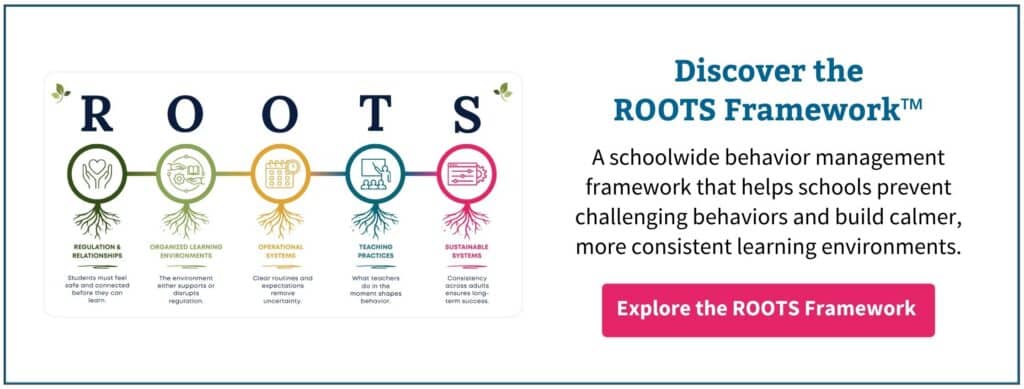
One of the simplest growth mindset strategies is the power of yet.
“I’m not good at reading” becomes “I’m not good at reading yet.”
We can apply that same thinking to behavior:
Of course, changing the words alone won’t change behavior. Students also need guidance, practice, and support.
But the language we use can help them begin to believe improvement is possible.
For more practical ideas, explore our 10 strategies and activities for creating a growth mindset in the classroom.
Growth mindset doesn’t have to become another classroom initiative. It can be part of everyday interactions.
Growth mindset is something we model, not just something we teach.
Having a growth mindset doesn’t mean allowing students to behave however they want.
Students still need clear expectations, predictable routines, consistent responses, and appropriate consequences.
But they also need opportunities to develop the skills required to meet those expectations.
As we explore in Why Consequences Alone Don’t Change Student Behavior, accountability works best alongside instruction, reflection, and opportunities to practice better responses.
Growth mindset complements effective behavior management by reinforcing a simple belief:
Students aren’t defined by the behaviors they’re struggling with today. With the right instruction, support, and opportunities to practice, they can grow.
Every teacher has encountered a student who seems convinced that things will never change.

The student who expects to get in trouble. The child who gives up before trying. The student who has started believing the negative labels they’ve heard.
We may not change those beliefs overnight.
But through our words, expectations, and everyday interactions, we can help students begin to see themselves differently.
We can recognize progress without ignoring mistakes. We can teach skills instead of assuming students already have them. And we can hold students accountable while continuing to believe in their ability to grow.
Because one difficult moment, one poor choice, or one challenging day doesn’t determine who a student can become.
Growth mindset and effective behavior management go hand in hand. Students need to believe they can improve, but they also need the right strategies, relationships, and support to make that growth possible.
At Strobel Education, we help schools bring both approaches into everyday practice through professional development designed for real classrooms.
Because helping students succeed isn’t just about changing their behavior today. It’s about giving them the confidence, skills, and support to keep growing.


