Back-to-School Teacher Checklist: 10 Habits That Help Prevent Burnout All Year
Start the school year with simple routines that protect your energy, strengthen student connections, and make well-being a priority all year long.
At a Glance: Back-to-school season brings fresh energy, new students, and the chance to begin again. But the habits teachers establish during the first weeks of school can also shape their stress and well-being throughout the year. These 10 practical teacher habits can help you protect your energy, set healthy boundaries, and build a more sustainable school year.
A Fresh School Year Is a Fresh Start
There’s something special about the beginning of a new school year: A freshly organized classroom. New names on the roster. New supplies. New ideas you can’t wait to try. And that feeling that this year can be different.
But somewhere between August excitement and the realities of lesson planning, overflowing email inbox, student needs, behavior challenges, and grading, that energy can begin to disappear.
It’s not just in your head—RAND Corporation surveys show that over 52% of teachers report managing student behavior as their single top source of job-related stress, contributing to higher burnout rates than almost any other profession.
Teacher burnout rarely happens because of one difficult day. It builds gradually when stress becomes constant, and there is never enough time or energy to recover.
So this year, instead of waiting until you feel exhausted to take care of yourself, start differently.
Here are 10 habits you can build into your back-to-school routine now to help protect your energy throughout the entire school year.
1. Decide What Matters Most Before Everything Feels Urgent
The beginning of the school year has a way of making every task feel equally important.
It isn’t.
Before your calendar fills up with endless to-do lists, identify two or three core priorities you want to protect this year—both professionally and personally.
Maybe your priority is:
Building deeper, stronger relationships with your students.
Leaving the building by a specific time every afternoon.
Being fully present with your family once the school day ends.
When the school year inevitably gets busy and demands pile up, these pre-determined priorities become your compass for what to say “yes” to—and what to let go.
2. Create Boundaries Before You Need Them
Boundaries are much easier to establish in August than after you’re already exhausted in November.
Setting healthy work-life boundaries doesn’t mean you care less about your students; it means you care about sustaining your ability to show up for them long-term.
Before the school year reaches full momentum, set clear personal guidelines:
Email limits: Decide exact times when you will stop checking emails (e.g., no work email after 6.00 PM or between 4 PM and 7 PM, or on weekends).
Workload caps: Determine what work truly needs to come home with you, and what can stay at school.
Work-in-progress acceptance: Give yourself explicit permission to leave unfinished tasks on your desk for tomorrow.
Learning how to protect your well-being and prevent teacher burnout starts by accepting a simple truth: There will always be another email, another lesson to tweak, or another item on the to-do list. A sustainable teaching career requires recognizing that everything cannot be urgent all the time.
3. Build Classroom Routines That Make Your Job Easier
Strong routines aren’t only good for students—they protect teacher energy, too.
When students know exactly how to enter, transition, get materials, and ask for help, you give fewer repeated directions and make fewer split-second decisions throughout the day.
Focus on front-loading routines for high-friction moments:
Spending time teaching and practicing these routines at the beginning of the year is an investment that will drastically reduce your stress all year long.
4. Build Relationships Through Everyday Moments
This is one of the most important things you can do—for your students and for yourself. Build relationships before you need to manage behavior.
Your classroom doesn’t need to look picture-perfect on day one. What students will remember most is how they felt when they walked through your door.
Focus your first week’s energy on genuine connection rather than flawless decor.
During the first week, make it a goal to:
Learn every student’s name—and pronounce it correctly.
Ask open-ended questions about their interests outside of school.
Notice each student’s unique strengths and acknowledge them early.
Find one positive thing to say to every student before the week ends.
As the year progresses, keep those connections growing through everyday moments:
Morning arrival: Welcome each student by name and notice something specific. “I like your new backpack.” “I’m glad you’re here today.” “How did your soccer game go?” Small, genuine observations help students feel seen—not just present.
Independent work: Spend a few minutes each day sitting beside a different student. Don’t always ask about the assignment. Ask what they’re reading, what they’re are excited about, or what they enjoy doing outside of school. Those brief conversations build trust over time.
Mistakes and questions: Celebrate students who ask for help. Respond with phrases like, “I’m really glad you asked,” or “That’s exactly the kind of question good learners ask.” Students are much more willing to take academic risks when they know mistakes are part of learning.
End-of-day dismissal: Skip the generic “Have a good day.” Instead, end with something personal: “Good luck at your game tonight!” or “Thanks for helping your partner today.” Those few seconds remind students that you notice who they are—not just what they accomplish.
Above all, students will always remember how you made them feel. When students feel seen, safe, and connected, they are far more likely to participate, ask for help, stay engaged, and reduce student behavioral issues.
You don’t need to introduce every new tool, strategy, and system in September. Overloading your classroom too fast creates unnecessary pressure that leads straight to early-season exhaustion.
Pick one focus area to master first (like a transition signal or arrival routine).
Build consistency until it becomes second nature for your students.
Layer in new ideas gradually as the school year progresses.
Sustainable teaching is built step by step, not all on day one.
6. Protect Your Small Moments of Recovery During the Day
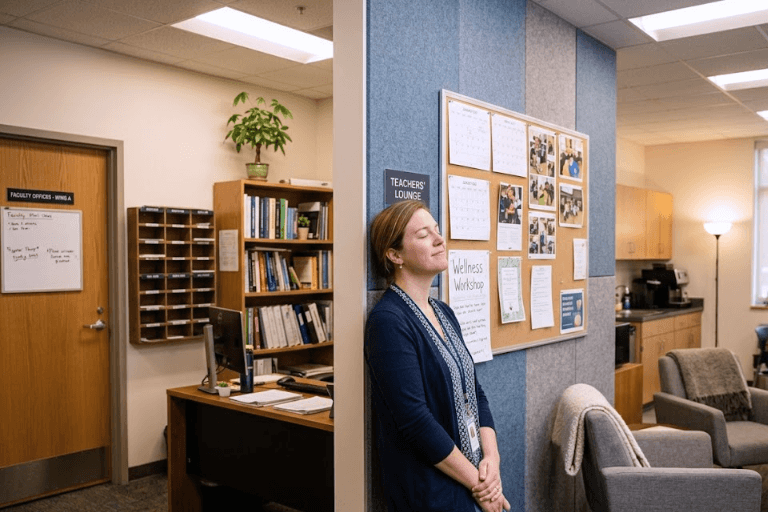
Surface-level self-care isn’t enough when you are drowning in fatigue. At Strobel Education, we advocate for Radical Wellness – the understanding that well-being isn’t a luxury, but an absolute necessity for sustainable teaching.
Part of this practice requires dropping the guilt of putting yourself first. Stepping away from work for a few minutes each day doesn’t make you selfish; it makes you a better teacher. You simply cannot pour from an empty cup.
Protect small micro-breaks throughout your school day:
Taking three quiet minutes between classes to reset your mind.
Eating lunch without answering emails or grading papers.
Stepping outside for fresh air immediately after dismissal.
Taking slow, grounding breaths before students enter the room.
These small moments help keep your nervous system out of constant “go-mode.” Don’t wait until Friday afternoon (or summer break) to permit yourself to reset. Treat your Radical Wellness as a daily priority.
7. Pay Attention to Your Inner Voice
Teachers often extend endless patience to students while speaking harshly to themselves when things go wrong.
Notice when self-critical thoughts creep in:
“I’m so behind.”
“I should have handled that better.”
“Everyone else seems to have this figured out.”
When you catch those thoughts, gently replace them with self-compassion:
“Today was hard, but what I did was enough.”
“I can be a great teacher without doing everything perfectly.”
Positive self-talk isn’t about pretending tough days don’t happen. It is about refusing to let one hard moment define your worth as an educator.
8. Ask for Help Before You’re Overwhelmed
You don’t get extra points for carrying every struggle alone. When classroom challenges mount, reaching out early prevents a manageable issue from turning into chronic stress.
Talk to your grade-level team or grade-band colleagues to share ideas.
Ask administrators for support with high-need situations before burnout sets in.
Seek systemic solutions: If widespread behavioral issues are overwhelming your team, advocate for schoolwide behavior management strategies that build consistency across your entire building.
Strong educators collaborate. Asking for support isn’t a sign of weakness—it’s a hallmark of professional longevity.
9. Create an End-of-Day Reset
Teachers often physically leave school while mentally carrying every unfinished task home.
Creating a simple shutdown routine signals to your brain that the workday is officially done:
Write down tomorrow’s top 3 priorities so they don’t loop in your mind all evening.
Tidy your main workspace to start fresh the next morning.
Build a boundary buffer: Take a short walk, or listen to an energizing podcast on your drive home.
The specific routine matters less than the intention behind it: creating a clear line between your professional role and your personal life.
10. Remember What You Want This Year to Feel Like
We spend endless hours setting goals around what we want to accomplish. This year, try setting a goal around how you want to feel:
Connected
Calm
Joyful
Confident
Present
When school gets busy, ask yourself: “What daily choices will help me protect this feeling?”
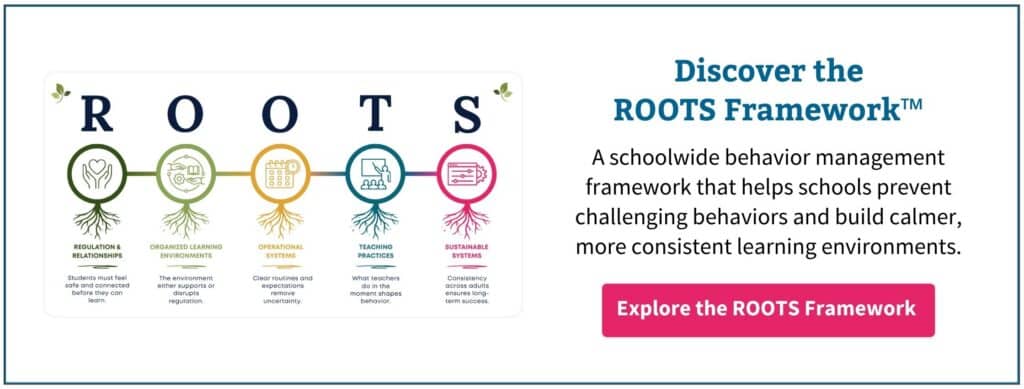
When individual effort isn’t enough, transforming school culture often requires leaning on a broader support system like The ROOTS Framework™ to bring lasting relief and joy back to your teaching day. Your well-being matters—and your answer to how you want to feel is far more important than any to-do list item.
Make This School Year Different
The start of a new school year is full of possibilities. You don’t need a perfect plan; you just need a few intentional habits that make your work sustainable.
At Strobel Education, this is the heart of Teach Happy: happiness isn’t something we wait for; it is something we build through daily choices.
Start small. Protect your energy. Give yourself room to be human. Let this be the school year where taking care of you becomes part of taking care of your classroom.
Bring Lasting Change to Your School:
Transform Culture: When individual effort isn’t enough, transforming school culture often requires leaning on a broader support system like The ROOTS Framework™ to replace systemic behavior stress with schoolwide consistency.