How to Approach Holiday Questions in the Classroom: A Teacher’s Guide to Responding with Care and SEL

-holiday_questions-SEL_

How to Answer When Students Ask about Christmas, Hanukkah, or Santa.

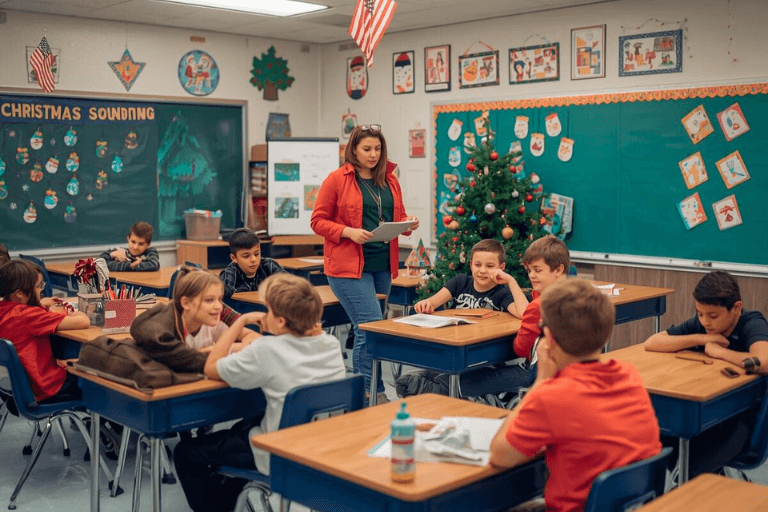
The holiday season brings joy, excitement, and plenty of questions from curious students. Teachers often find themselves navigating conversations about Santa, elves, religious celebrations, or why families celebrate different traditions.
-classroom_holiday_season-

These questions can be tricky, especially in a diverse classroom. Students bring a wide range of beliefs shaped by their families, cultures, and traditions. When teachers answer with sensitivity, it helps create a classroom where every student feels safe enough to share, ask questions, and participate fully.

Research from the Center for Child Development shows that children feel more secure and engaged when teachers respond to their questions with empathy and clarity. This is also a powerful opportunity to practice Social-Emotional Learning (SEL) skills, such as perspective-taking, emotional awareness, and respect for differences.

1. Prepare for the “Big Questions.”

During the holidays, teachers often hear questions like:

  • “Is Santa real?”
  • “Why does my friend get presents and I don’t?”
  • “Why doesn’t my family celebrate Christmas?”

Start With Curiosity: Ask What They’ve Heard

Before answering, gently explore what the student already understands.

Try asking:

  • “That’s a great question. What have you heard so far?”
  • “Tell me what you think about it.”

This helps you sense if the child is seeking reassurance, clarity, or just sharing excitement.

Try This Simple Response Template: Acknowledge + Affirm + Redirect

  • “That’s a thoughtful question. I love that you’re wondering about this.”
  • “Different families have different traditions and beliefs, and that’s what makes everyone special.”
  • “This is something you can talk about at home with your family. What your family believes is what matters most.”

This approach honors each family’s values while guiding children back to trusted adults at home.

Keep the Magic While Staying Inclusive

Teachers can preserve joy without contradicting any belief system.

Try saying:

  • “A lot of families celebrate Santa as a symbol of kindness and giving.”
  • “Every family has traditions that feel magical to them.”
  • “Some families believe in Santa, some light candles for Hanukkah or Diwali, and others have their own special celebrations.”

These responses validate many traditions and help children feel proud of their own family practices.

2. Encourage Perspective-Taking using SEL Language

The holidays are the perfect time to model emotional understanding and awareness.

Try This:

  • “Some students believe in Santa, and some don’t. How can we show respect for each other’s experiences?”
  • Create a class norm of “We listen, we don’t judge, we stay kind.”
  • Use morning meetings to explore feelings around holiday excitement, confusion, or exclusion.

Why It Works:

Children learn empathy by seeing it modeled. When teachers elevate curiosity and respect, classroom culture becomes more inclusive and emotionally safe.

-SEL-CTA-

3. Celebrate Diversity Through Stories and Activities

Teachers can help students understand and respect one another by introducing a variety of holiday traditions.

Ideas to Try:

  • Read books that highlight a variety of celebrations such as Diwali, Hanukkah, Kwanzaa, Christmas, Las Posadas, and Lunar New Year.
  • Invite students to share stories or traditions from home, optionally.
  • Create a “Celebrating Our Classroom” bulletin board that honors the unique traditions represented in your community.

Why It Works:

Representation helps students feel seen and valued. When children see their culture reflected in the classroom, feelings of belonging and engagement increase significantly.

4. Create a Safe and Inclusive Classroom Environment

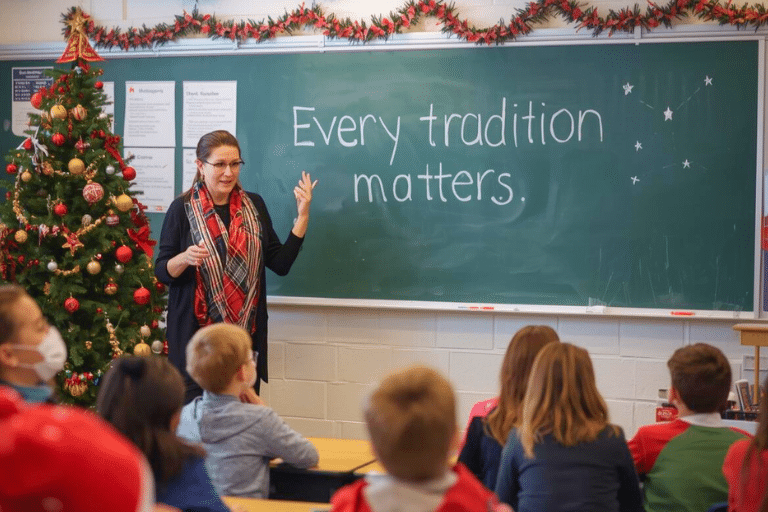
You can set expectations early in December by reminding students that everyone’s traditions matter.

-diversity_tradition_holiday-

Try This:

  • “In our classroom, all celebrations are welcome.”
  • “We never tell someone their traditions aren’t real or true.”
  • Provide quiet activities for students who do not participate in holiday celebrations.

Why It Works:

Predictable routines and clear expectations lower anxiety for students who may feel unsure or left out during the holiday season.

Final Thought

Navigating holiday conversations is an opportunity to strengthen connection and sense of belonging. When teachers respond with warmth, neutrality, and cultural awareness, students learn empathy and respect, skills that serve them long after the holidays are over.

To help teachers bring more joy, calm, and well-being into the school year, explore our onsite PD Reclaiming the Joy of Teaching, where educators learn research-based habits to reduce stress and build lasting resilience.

Subscribe to our blog today!

How to Approach Holiday Questions in the Classroom: A Teacher’s Guide to Responding with Care and SEL Individual Pay via PO

Provide us with the information below, and someone from our support team will be in touch within 48 business hours. Once payment is received, you will receive access to the workshop. 

How to Approach Holiday Questions in the Classroom: A Teacher’s Guide to Responding with Care and SEL Custom Quote Request

Place A Bulk Order

For bulk orders of 10 or more copies, we offer a special rate of just $15 per book. To place your bulk order, please fill out the form below with your details and the desired quantity. Our team will respond promptly to finalize your order.

How to Approach Holiday Questions in the Classroom: A Teacher’s Guide to Responding with Care and SEL Custom Quote Request