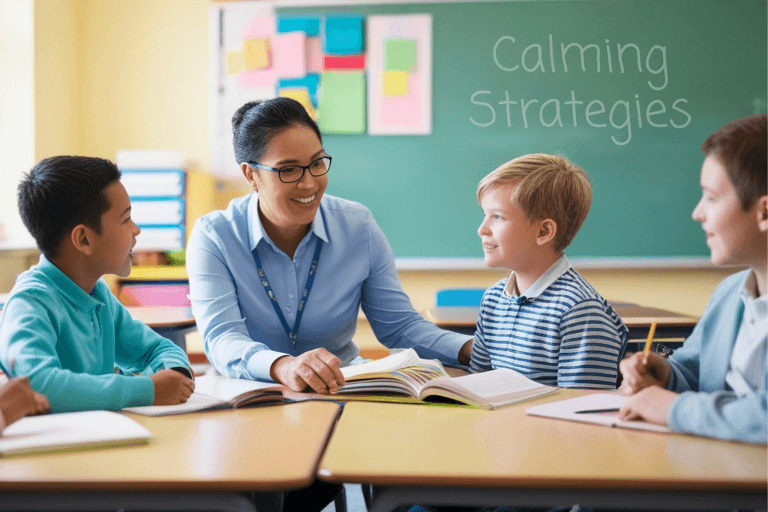
Practical calming strategies any adult can use — no perfection required
If you’ve ever stood in the middle of a classroom during a meltdown or listened to the tenth “I’M NOT TIRED!” of the day and wondered, “Will this ever get easier?” you’re not alone, and you’re definitely not failing. The good news? You don’t need to be a child psychologist or have endless patience to help children navigate big emotions.
Big feelings are a completely normal part of childhood. Young brains feel everything just as intensely as adults — sometimes even more — but they don’t yet have the tools to slow down or work through those emotions. The reassuring part is that emotional regulation is a skill children can learn, and the adults around them play the most important role in teaching it. Our trauma-informed professional development highly focuses on creating regulated classrooms and schools.
Research from Yale’s Center for Emotional Intelligence and Harvard’s Center on the Developing Child shows that when children learn to recognize and manage their feelings, they experience less stress, build stronger relationships, and perform better academically and socially.

This guide shares simple, research-backed strategies you can start using today. Whether you’re a teacher, caregiver, or parent, you can help children turn big feelings into meaningful growth.
1. Start With Naming the Emotion
Children can’t regulate what they don’t understand. One of the quickest ways to help a child calm down is to help them identify what they’re feeling. When emotions have names, they become less overwhelming.
Try saying (calmly and kindly):
- “It looks like you’re feeling frustrated right now.”
- “I can see your body is really tense — are you feeling angry?”
- “You seem disappointed that the activity ended.”
Using simple, descriptive language helps children understand that emotions are normal — and temporary.
2. Validate and Normalize Their Feelings
Children need to know that their emotions are real and acceptable. When adults acknowledge a child’s feelings, it creates safety, connection, and trust.
Try saying:
- “It’s okay to feel this way.”
- “That was really hard. I understand why you’re upset.”
- “Anyone would feel frustrated right now.”
Avoid phrases like “You’re fine,” “Calm down,” or “It’s not a big deal,” which can make children feel unheard.
Validation helps children regulate more quickly because they feel understood instead of judged.
3. Create a Calm-Down Routine
When emotions spike, children need a predictable way to return to calm. A simple routine teaches them that feeling overwhelmed isn’t permanent and that they have tools they can use.
Ideas to try:
- Slow belly breaths or “blowing out birthday candles”
- A cozy corner or quiet space with soft items
- Hugging a stuffed animal or weighted pillow
- Soft music or calming sounds
A grounding activity like “5-4-3-2-1” (five things you see, four you can touch, etc.)
Let the child help choose what goes into their calm-down tools. When they feel ownership, regulation becomes easier.

4. Teach Problem-Solving Once They’re Calm
Children can’t reason during a meltdown. After emotions settle, they become much more open to learning.
Try asking:
- “What could help next time?”
- “What can we do if this happens again?”
- “What would help your body feel better right now?”
- “Was there anything you wish I had done differently?”
These reflective questions help children learn resilience and give them confidence in handling tough moments.
5. Model Healthy Emotional Regulation
Children learn emotional skills by watching the adults around them. When you name your own feelings and demonstrate healthy coping tools, you teach emotional intelligence through example.
Try saying:
- “I’m feeling stressed, so I’m going to take a few deep breaths.”
- “I’m frustrated that the computer froze, but I know this feeling won’t last.”
- “My heart feels jumpy. Let’s do some big bear breaths together.”
When children see you work through emotions, they learn that feelings are manageable and not something to fear.
6. Create Predictable Routines
Many emotional outbursts are triggered by overwhelm, fatigue, or unexpected changes. Predictability helps children’s nervous systems feel safe.
Simple routines that help:
- A consistent bedtime rhythm (bath → books → bed)
- A quick morning emotional check-in
- Regular meal and rest times when possible
- Clear, simple expectations like “After cleanup, we line up.”
Predictable routines act as a quiet safety net, lowering background stress and reducing emotional overload.
Final Thought
Big emotions are a normal part of growing up. With patient, supportive adults, children can learn how to understand and manage those feelings in healthy ways. By naming emotions, validating their experience, modeling calm, and offering predictable routines, you help children build lifelong emotional skills that support confidence, resilience, and happiness.
For more tools to support children’s emotional well-being and create joyful learning environments, explore our Teach Happy Professional Development Resources at Strobel Education.