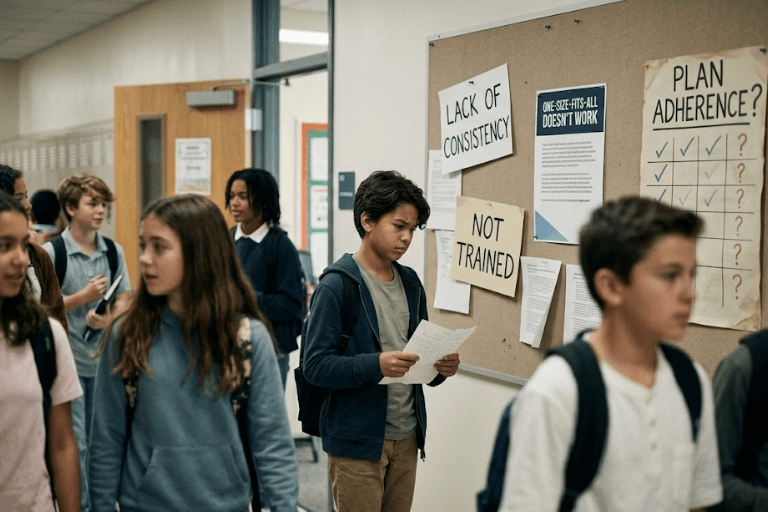
Moving beyond isolated interventions to create lasting behavior change
Across the country, educators are investing significant time, energy, and resources into supporting student behavior.

Schools implement behavior plans, Check-In Check-Out systems, reward programs, social-emotional learning initiatives, restorative practices, counseling supports, and individualized interventions. Teachers attend meetings, collect behavior data, and work closely with families to help students succeed.
Yet despite these efforts, many schools find themselves asking the same question:
Why do the same behavior challenges continue to show up?
The answer is often surprising.
In many cases, the issue is not that schools lack interventions. It’s that interventions are being implemented within systems that are not fully aligned.
When behavior challenges increase, the natural response is often to add another strategy.
A student struggles with emotional regulation, so an intervention is created.
Another student receives a behavior contract.
A third is placed on a point sheet.
Soon, schools find themselves managing dozens of interventions while still seeing many of the same challenges.
Interventions can absolutely be effective. Many students benefit from individualized support.
The challenge is that interventions are designed to support a small percentage of students. They are not intended to carry the weight of an entire school’s behavior management system.
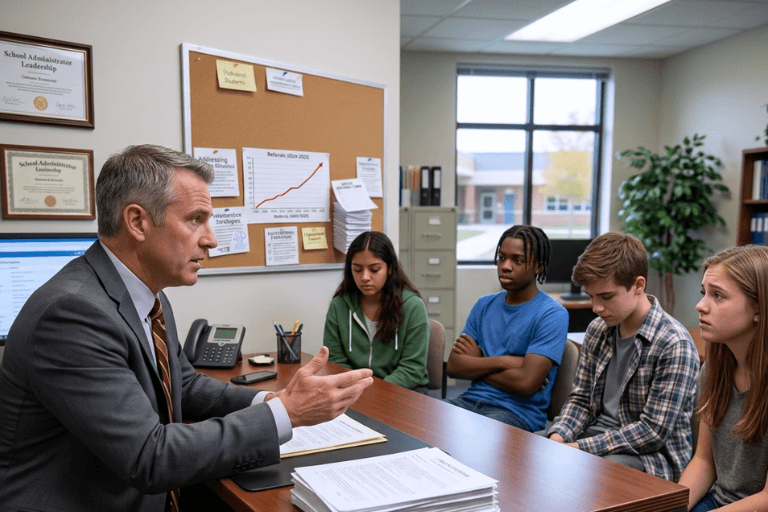
When schools rely primarily on interventions, they often end up reacting to behavior after it occurs instead of creating conditions that prevent many behavior challenges from occurring in the first place.
One of the most important lessons behavior specialists learn is that behavior does not happen in isolation.
Student behavior is influenced by:
Consider a student who struggles with transitions.
That student’s behavior may improve significantly in one classroom and worsen in another.
Why?
Often, the difference is not the student.
The difference is the environment surrounding the student.
Clear expectations, predictable routines, and consistent adult responses create conditions that help students succeed.
When those conditions vary from classroom to classroom, behavior often becomes less predictable.
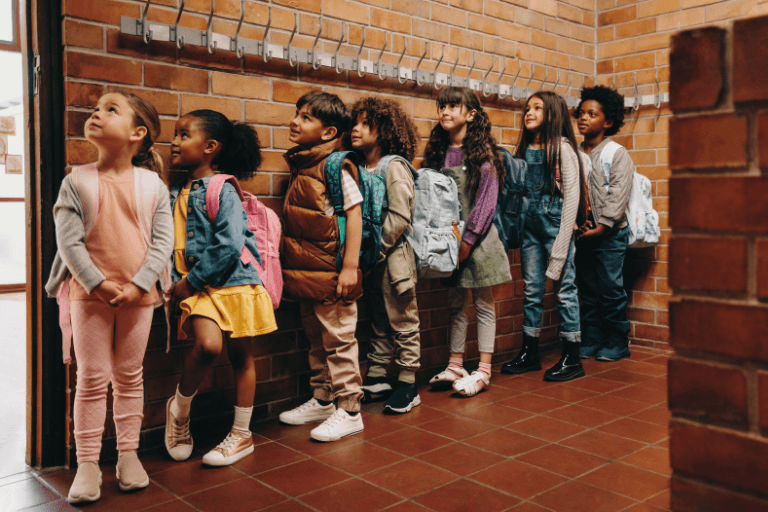
Students spend their day moving between classrooms, hallways, cafeterias, playgrounds, buses, and common spaces.
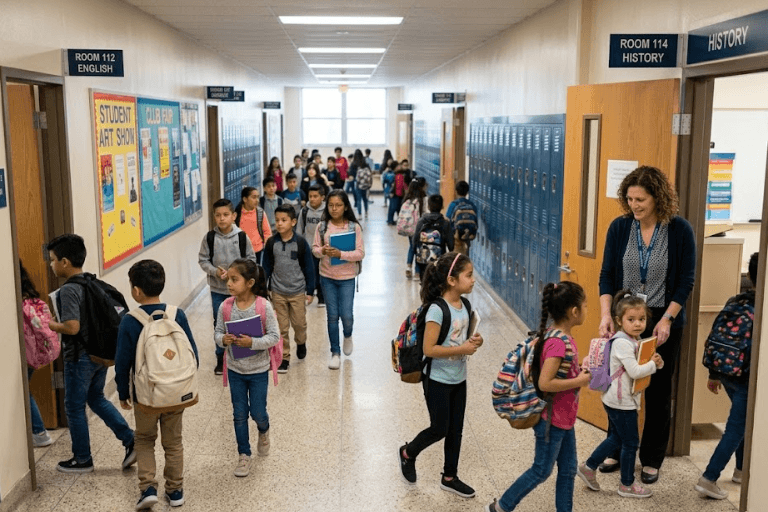
When expectations change dramatically across those environments, students are constantly trying to figure out:
That uncertainty creates stress.
For some students, especially those who struggle with self-regulation, inconsistency can contribute directly to behavior challenges.
This is why behavior management cannot exist only at the classroom level.
Students need consistency across the entire school experience.
Schools that experience long-term improvements in behavior tend to shift their thinking.
Instead of asking:
“How do we stop this behavior?”
They begin asking:
“What conditions are helping or hindering student success?”
This subtle shift changes everything.
Schools start examining:
The goal becomes creating consistent learning environments where positive behavior is more likely to occur naturally.
Effective schoolwide behavior management is not about stricter rules or harsher consequences.
It is about alignment.
When educators share common expectations and practices:
This is why schoolwide behavior management systems are so powerful.
They create a foundation that supports every student while allowing targeted interventions to work as intended.
Behavior interventions still play an important role.
Some students need additional support, targeted instruction, or individualized plans.
But interventions should not be the foundation of behavior management.
They should be built on top of a strong foundation.
When schools establish:
Interventions become more effective because students are already operating within a supportive system.
Behavior interventions are valuable tools, but even the best intervention can struggle when the systems surrounding it are inconsistent.
The schools seeing the greatest success are not necessarily implementing more programs. They are creating stronger conditions for learning schoolwide.
When relationships are prioritized, environments are predictable, systems are aligned, and educators share a common approach, students are more likely to feel safe, connected, and ready to learn.
That is where meaningful, lasting behavior change begins.
At Strobel Education, after decades of working in classrooms and partnering with schools for training and coaching, we’ve learned that lasting behavior change rarely comes from a single intervention, program, or initiative. It comes from strengthening the systems, environments, and daily practices that shape behavior every day.
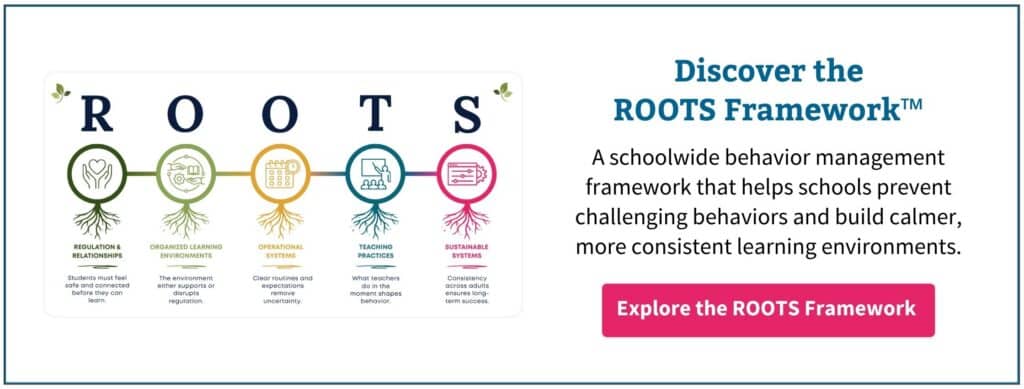
That’s why we created the ROOTS Framework™.
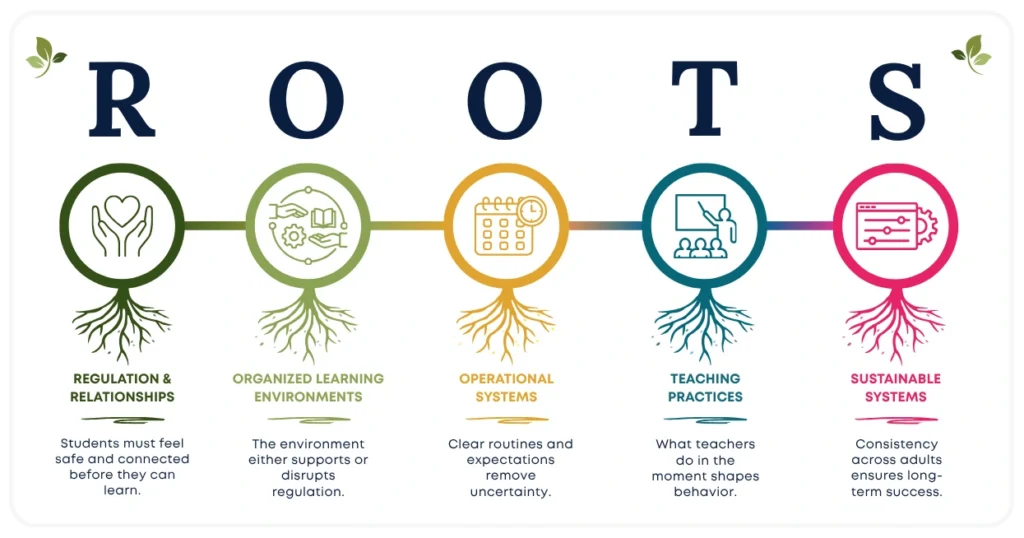
ROOTS is a practical schoolwide behavior management system designed to help educators address challenging behaviors at their source by strengthening relationships, supporting student regulation, creating consistent learning environments, and aligning schoolwide practices.
Everything we do starts at the ROOT.