At a Glance: The Evolution of Student Behavior Management
The Core Problem: Traditional discipline focuses entirely on what happens after a behavior occurs, which rarely stops the same behaviors from repeating.
The Reality: Many modern classroom disruptions stem from lagging developmental skills rather than simple defiance.
The Solution: Aligned, proactive schoolwide behavior management systems that teach replacement behaviors and reduce teacher burnout.
Every educator has experienced it.
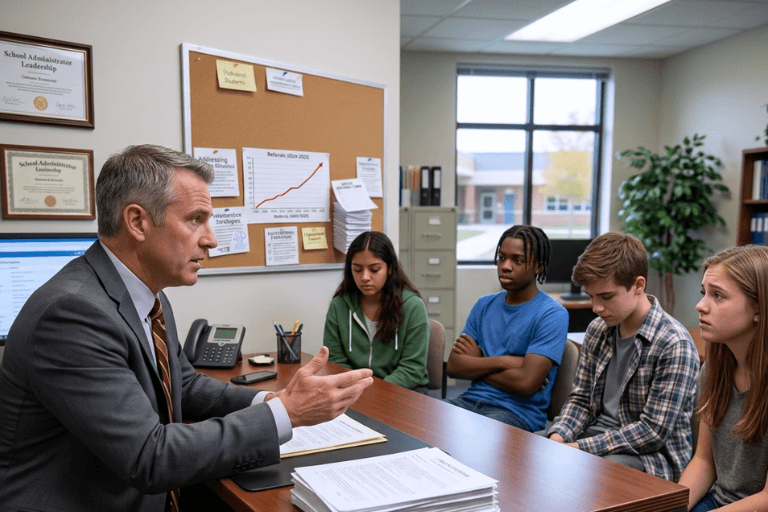
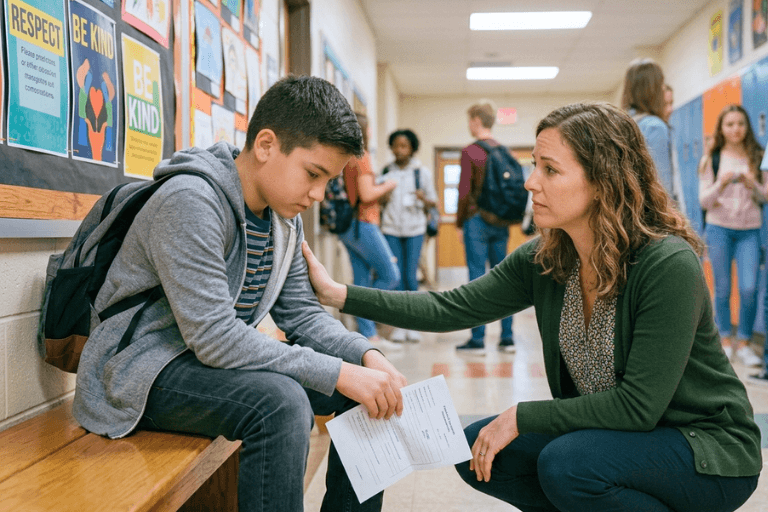
A student receives a consequence for disruptive behavior.
The next day, or sometimes the next hour, the same behavior happens again.
The teacher tries another consequence.
The administrator follows school procedures.
Parents are contacted.
Yet the behavior continues.
This leads many educators to wonder:
“Why aren’t consequences working anymore?”
The answer isn’t that consequences no longer matter.
It’s that consequences alone were never designed to teach the skills students need to behave differently.
Consequences remain an important part of effective behavior management.
They establish boundaries.
They reinforce expectations.
They help maintain a safe learning environment.
Students need accountability, and schools need consistent expectations.
But consequences primarily answer one question:
“What happens after a behavior occurs?”
They rarely answer the equally important question:
“How do we help students respond differently next time?”
Without teaching replacement skills, many students simply repeat the same behavior.
One of the biggest shifts in education over the past decade has been our understanding of student behavior.
Many students’ challenging behaviors are connected to lagging skills rather than defiance alone.
Students may struggle because they haven’t yet developed the ability to:
These skills are just as teachable as reading, writing, or mathematics.
When schools intentionally teach and reinforce them, behavior begins to change.
Are your educators equipped to respond to the complex behaviors showing up in today’s classrooms?
Our Behavior Management Professional Development gives educators classroom-tested strategies to understand challenging behavior, teach replacement skills, strengthen student regulation, and respond with greater confidence and consistency.
Teachers today often describe spending more time managing behavior than ever before.
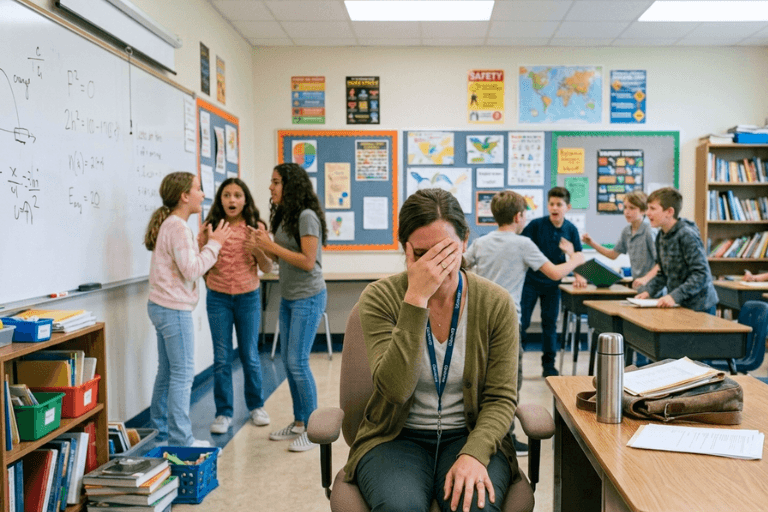
Instead of focusing entirely on instruction, they’re constantly switching between the roles of:
That constant decision-making creates emotional fatigue.
When behavior management becomes primarily reactive, teachers spend less time teaching and more time putting out fires.
This is one reason student behavior is so closely connected to higher levels of teacher burnout.
Teachers today often describe spending more time managing student behavior than ever before.
Instead of focusing on instruction, they’re constantly switching between the roles of teacher, counselor, mediator, coach, and behavior manager, all while trying to keep students engaged and learning.
Many educators simply don’t feel equipped with practical behavior management strategies for the complex behaviors showing up in today’s classrooms. When behavior management becomes primarily reactive, teachers spend less time teaching and more time putting out fires.
When a student escalates, refuses to participate, or repeatedly disrupts instruction, teachers are forced to make constant decisions in the moment.
Do I redirect? Pause instruction? Call for support? Give a consequence? Why isn’t what worked yesterday working today?
That constant decision-making creates emotional fatigue and discouragement.
It’s no surprise that ongoing student behavior challenges are closely connected to teacher stress and burnout.
Teachers need practical strategies, consistent support, and clear systems that help them know what to do when challenging behavior occurs.
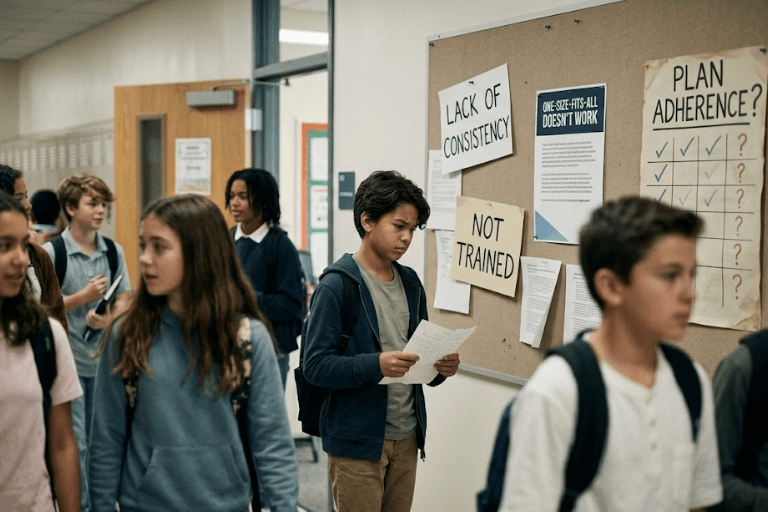
Imagine a student who hears one expectation in math, another in science, and something completely different in the hallway.
One teacher redirects quietly.
Another sends students to the office.
Another ignores the behavior altogether.
From the student’s perspective, the rules keep changing.
Consistency creates safety.
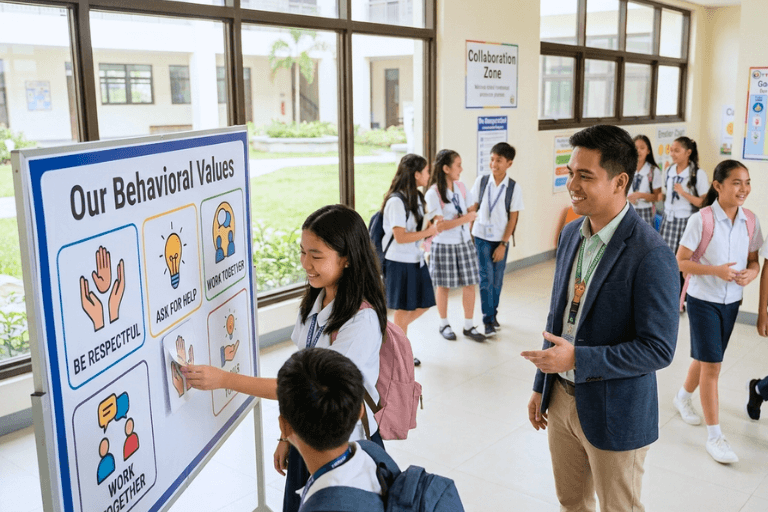
When expectations, routines, and adult responses are aligned across the entire school, students know what is expected no matter where they are.
That predictability reduces anxiety, strengthens self-regulation, and makes positive behavior more likely.
What happens when every adult in the school has the same language, expectations, and approach to behavior?
Our customized onsite Behavior Management Professional Development and Coaching helps schools move beyond isolated classroom strategies and build consistent, proactive systems that support educators and students throughout the school day.
The most successful schools don’t spend all of their energy responding to challenging behavior.
They spend just as much energy preventing it.
That means intentionally creating classrooms and school environments where positive behavior is expected, practiced, and reinforced every day.
Proactive schools focus on:
Behavior management becomes something students learn—not simply something adults enforce.
Sometimes educators worry that focusing on relationships or regulation means lowering expectations.
The opposite is true.
Students still need accountability.
But accountability becomes far more meaningful when it’s paired with:
The goal isn’t simply changing today’s behavior.
The goal is to help students develop the skills they will use for years to come.
At Strobel Education, years of work in behavior management, PBIS, MTSS, self-regulation, restorative practices, and school improvement led us to one important realization:
No single strategy changes student outcomes.
Consequences matter.
Relationships matter.
Classroom management matters.
Behavior interventions matter.
But lasting improvement happens when all of those practices work together within one aligned schoolwide system.
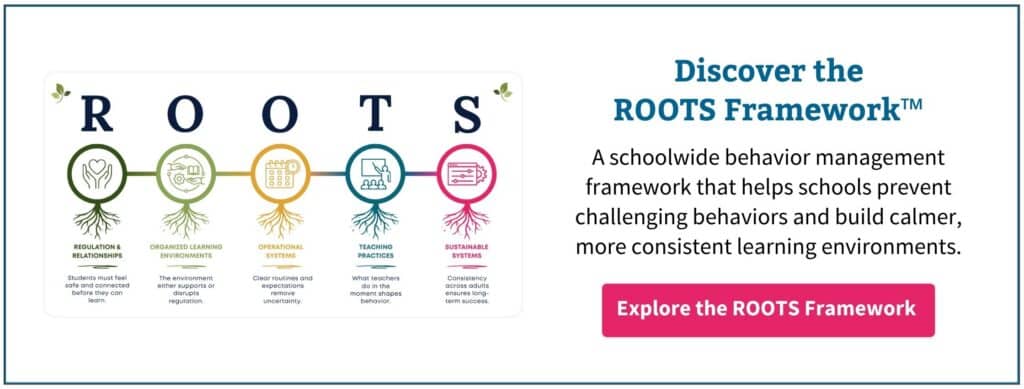
That belief ultimately led to the creation of the ROOTS Framework™, a schoolwide behavior management framework that helps schools create consistent expectations, strengthen student regulation, align staff responses, and build environments where positive behavior can thrive.
Because the goal isn’t simply giving better consequences.
It’s creating schools where students develop the skills they need to succeed long-term.