

The Core Problem: Student behaviors are increasingly complex, leading to frequent classroom disruptions that traditional classroom management strategies can’t fully address.
The Impact: Dedicated teachers are facing unprecedented levels of teacher burnout, trying to carry the load alone.
The Solution: Moving away from isolated classroom tactics and building consistent, schoolwide behavior management systems.
Teachers are feeling this strain as well. A 2024 survey highlighted by the National Education Association (NEA) found that 68% of teachers reported experiencing verbal abuse from students, and about one in five said it happens at least a few times each month. These findings help explain why many educators describe student behavior management—not paperwork or grading—as one of the most emotionally demanding parts of teaching today
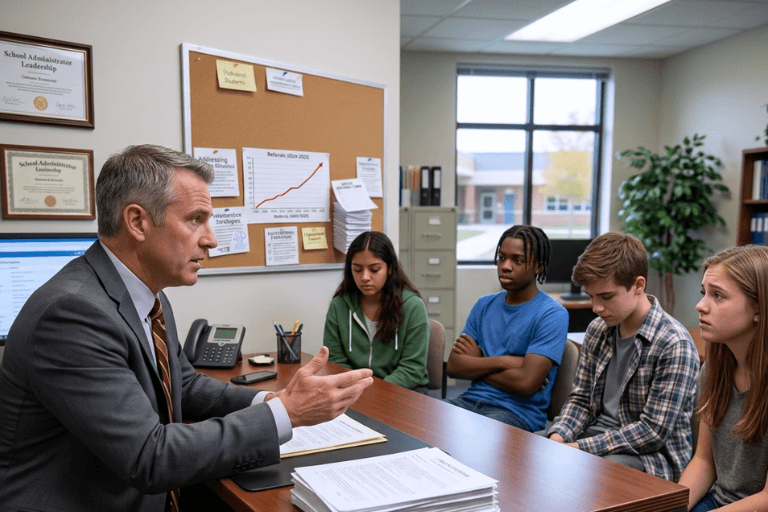
Experienced teachers who once felt confident managing behavior now find themselves responding to more disruptions, more emotional outbursts, and more time spent redirecting students than ever before. Schools are seeing more office referrals than ever before.
For new teachers, the challenge can feel even greater.
It’s easy to assume this means teachers aren’t doing enough.
But that’s rarely the case.
The reality is that today’s classrooms are different. Students arrive with a wider range of academic, behavioral, and social-emotional needs than ever before. Teachers are expected to differentiate instruction, support mental health, manage increasingly complex behaviors, communicate with families, analyze data, and still provide engaging instruction every day.
Excellent classroom management remains one of the most powerful tools teachers have.
These practices continue to prevent countless behavior problems before they begin.
Strong classroom management creates the conditions where students feel safe, focused, and ready to learn.
To figure out where students are struggling before behaviors escalate, many educators can rely on social-emotional mini-assessments to gauge classroom climate in real time.
But even the best classroom management has limits.
Students don’t spend their day with one single teacher.
They move through hallways, specials, lunch, recess, buses, intervention groups, and multiple classrooms, each with different expectations, routines, and responses.
That’s where schoolwide behavioral management consistency becomes essential.

Many student behavior challenges are no longer isolated incidents of minor defiance. Teachers are increasingly carrying the weight of supporting students who struggle with foundational developmental skills, including:
Because these challenges stem from skill deficits rather than simple non-compliance, it is crucial to recognize why challenging student behavior is not a discipline problem that traditional punitive measures can fix.
These are complex skills that require deep, consistent reinforcement throughout the entire school day. When every adult has a different expectation or language, students spend their day in confusion. No single teacher can sustain these skills alone—and expecting them to do so is actively accelerating teacher burnout.
One of the most common frustrations we hear is:
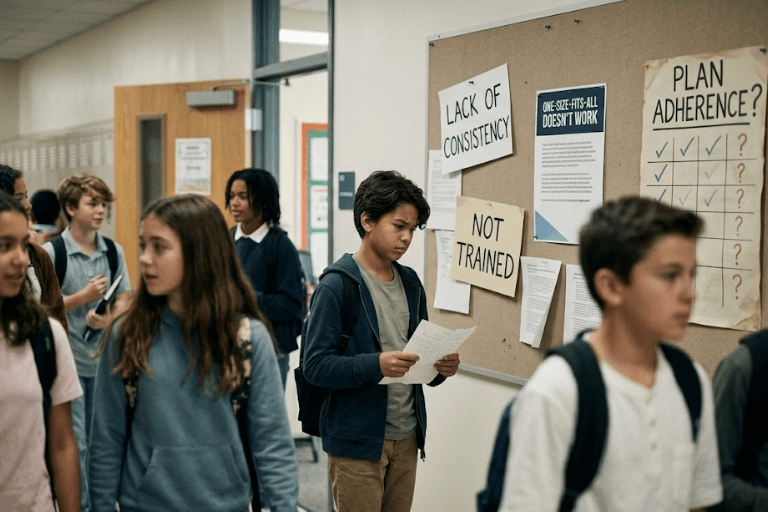
“Every year we implement something new.”
A new program.
A new initiative.
A new behavior chart.
A new incentive system.
Yet, this constant shifting is exactly why student behavior interventions fail. Teachers don’t need another isolated program.
They need consistency.
They need a common language.
They need aligned expectations.
They need to know that students experience the same behavioral expectations no matter which classroom they enter.
Teacher burnout is often discussed strictly in terms of workload. But student behavior plays a massive, undeniable role.
When teachers spend much of their day responding to constant disruptions, they have less time for actual instruction, relationship-building, and meaningful learning. If we want to retain our best educators, we must look at how teachers can heal from burnout without leaving the profession, which starts with systemic support.
Supporting teachers means creating systems that reduce unnecessary decision-making and provide shared, predictable approaches to behavior management. When everyone responds consistently, teachers no longer carry the heavy responsibility of behavior management entirely alone.
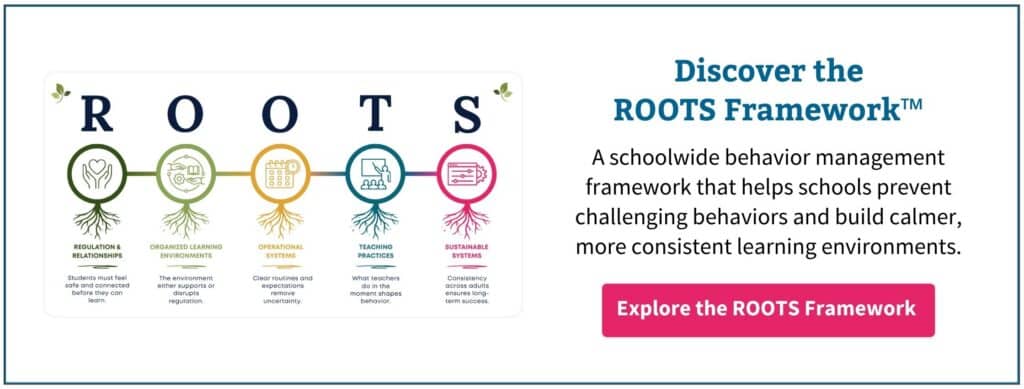
At Strobel Education, this belief became the foundation for the School-Wide Behavior Management ROOTS Framework™.
Rather than asking exhausted teachers to simply “manage behavior better,” ROOTS helps school leaders build aligned, predictable behavior management systems that support every classroom, every educator, and every student.
Because great teachers aren’t struggling because they’ve forgotten how to teach. They’re working in classrooms that require stronger, more cohesive systems than ever before.